Scott Radio Laboratories
Though not as prominent a marine radio
supplier
as RMCA or Lorain Scott Radio Labs. had several different versions of
an innovative receiver for marine use. These WW2 vintage
Scott marine receivers were designed to have very low local oscillator
radiation to thwart the detection of the ship via the enemy's use of
radio direction finding gear. Ocean going ships got
the priority for these receivers, but some were probably used on Great
lakes vessels later on. These units received LW, AM and 3 SW
bands, and were 120V AC/DC units; a somewhat unusual arrangement for
equipment in a metal cabinet. They were designed
this way, not as a cost-cutting measure, but because they were intended
for use both with the ships 120VDC supply and on land with the normal
120VAC supply. The versions without the BFO were intended
mainly for the reception of entertainment broadcasts - to help maintain
morale.
Most of the pictures of the
various versions below were taken by Max Summerville,
W8MMS.
The photographer of the others is unknown.
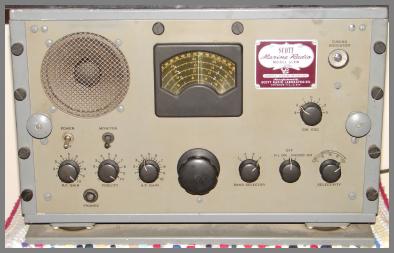
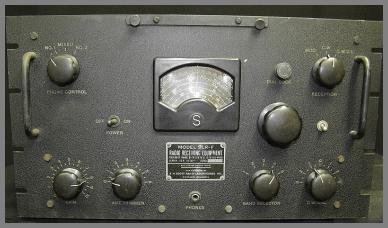 Above is
the SLR-F version and right is the SLR-M
version. The SLR-M was a commercial version
which found uses beyond the marine service. |
|
|
|
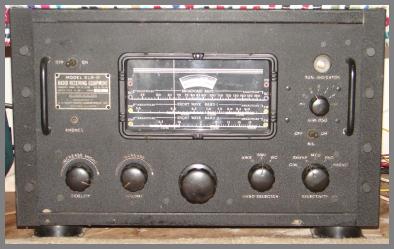 Above
is a SLR-H version with a 1942 date stamp, and right is the RBO-2 version. On the RBO-2 note
the absence of the BFO knob below the tuning eye and
the addition of the small Dial Lock knob right of
the main tuning knob. |
 |
|
|
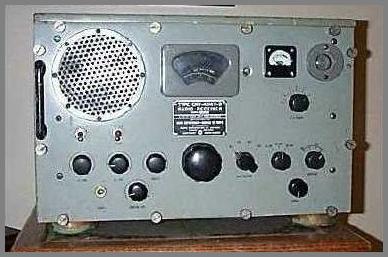
|
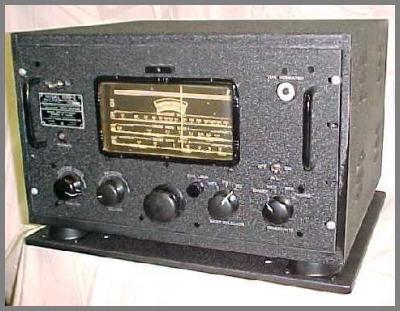
To
the left is the SLR-X - a close relative to the SLR-M version but with
some additional controls at the bottom of the panel. It
appears to be a Navy unit judging from its CRV nomenclature.
W8MMS
has supplied some interior views of the SLR-H
and K4OZY has exterior and internal photos of the SLR-M
Here are three more links to photos and/or information about the SLR-M - Link-1 --- Link-2 --- Link-3.
|
|
|
This PDF of three Scott Labs advertisements from the 1940s war
years show how Scott's low-radiation receivers kept US shipping quiet and safe from the listening-ears and torpedos of German U Boats.
